Driving Customer Engagement with Mobile Banking Experiences

Many small financial institutions talk about the need to punch above their weight. Central Pacific Bank (CPB) of Hawaii is one financial institution that’s doing it.
In a phased series of service launches this summer, the $7.37 billion-asset, full-service banking company has been rolling out a new mobile app that aims to make good on a vision of seamlessly embedding its services in customers’ daily lives. The bank’s goal mirrors that of many banks and credit unions, of all sizes, as they compete for customers who have come to expect engaging, predictive, and even addictive, mobile experiences.
CPB’s new mobile deployment shows how a bank can deepen engagement by making common financial tasks faster and easier. The project focused on turning routine interactions — such as checking balances or moving money — into opportunities for customers to do more within the same environment. Its larger goal was to expand product penetration and position themselves as an accountholder’s primary institution.
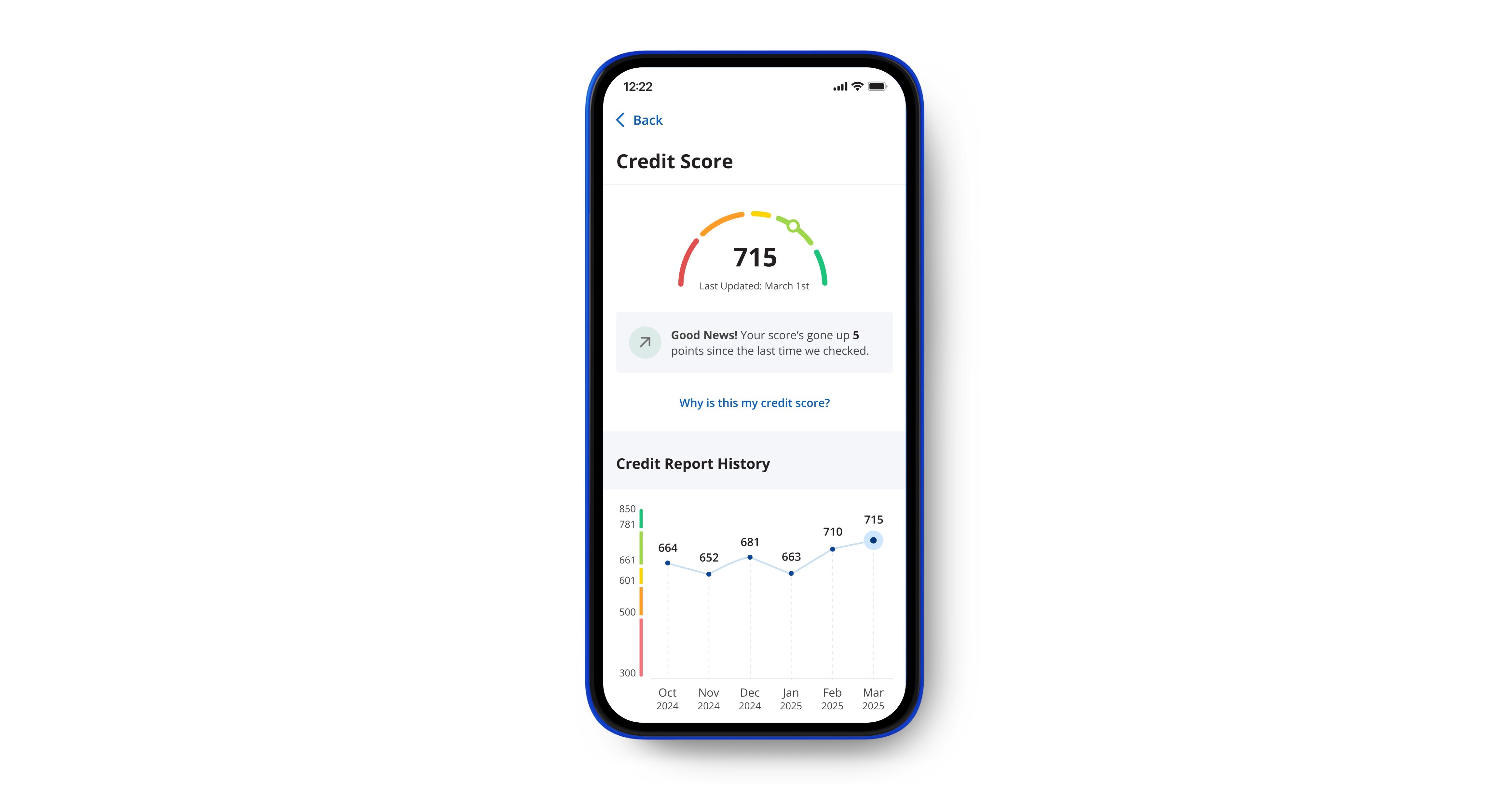
Working with MX, CPB launched a redesigned mobile app that includes integrated direct deposit switching, credit score monitoring, mobile-first account opening, and savings and budgeting tools. These features were introduced in phases, with early results showing sharp increases in usage when services moved from desktop to mobile.
The rollout demonstrates that a bank can bring a distinctive look and feel to market on a third-party platform — without the major effort or investment that an in-house development project would require. It highlights how smaller institutions deliver a mobile banking experience that elevates their brand and supports customer primacy.
Want more insights like these? Check out MX’s content hub: Data in Action
Optimizing for Omnichannel and Mobile
For the CPB team, achieving the bank’s mobile app ambitions required thinking both “globally” and “locally.” On one hand, the bank’s strategists were strongly committed to an omnichannel model. On the other hand, they wanted to “let mobile be mobile” — to actively leverage the specific ways people access services on their phones, without allowing that experience to be “muddied” by, for example, the assumptions and feature sets that underlie website design.
In a recent interview, CPB executives described how their view of digital evolved from seeing it as a separate track to treating it as one part of a broader system and relationship. These required them to shift from a mindset that separates “digital customers” from “branch customers,” toward an approach that sees people engaging across channels.
A key goal was to align digital and branch activity so customers could move naturally between them without friction, according to Brandt Farias, a CPB Executive Vice President and its Chief Marketing Officer. “We’ve really moved our thinking to an omni-channel experience where most customers touch the bank in all of those ways at a given time,” he said.
At the same time, the bank wanted to take full advantage of what mobile could do on its own terms. “Yes, we’re trying to develop some level of parity between what you can do in online banking and what you can do in mobile,” said Jason Lazzerini, an Executive Vice President and the Chief Digital Officer at CPB. “But we don’t want to muddy it so that the app’s mission is diluted.” That meant designing processes and functionality that fit the phone’s capabilities, such as credentialing a customer once and carrying that verification into new actions. “Can I keep it clean and simple, so that the message of our mobile app resonates better?”
link